


AI in Product Innovation and R&D: Transforming Ideas into Market Success
The journey from concept to market-ready product has always been complex, time-consuming, and resource-intensive. Research and Development (R&D) teams face challenges such as identifying emerging market trends, validating design concepts, optimizing prototypes, and predicting customer preferences. Artificial Intelligence (AI) is revolutionizing this process, enabling organizations to innovate faster, make data-driven decisions, and minimize costly trial-and-error cycles. By integrating AI into R&D, companies can transform creativity into measurable, market-ready outcomes.
Innovatov provides businesses with structured guidance, tools, and case studies to harness AI in product development. Our approach emphasizes leveraging predictive insights, intelligent experimentation, and automated workflows to enhance creativity, shorten development cycles, and align innovations with real customer needs. AI’s application in R&D is not merely about automation—it’s about accelerating the entire innovation lifecycle in a strategic and evidence-based manner.
Data-Driven Conceptualization and Ideation
AI accelerates the ideation phase by analyzing vast datasets, including market trends, consumer behavior, competitive product launches, and social sentiment. Machine learning algorithms can identify gaps in the market, emerging preferences, or product concepts with high potential. Unlike traditional brainstorming sessions, AI evaluates ideas objectively, combining historical performance, customer sentiment, and trend analysis to highlight concepts with the strongest probability of success.
Innovatov emphasizes structured AI-supported ideation, where human creativity is guided by evidence-based insights. Teams can prioritize concepts that resonate with target markets, validate assumptions with predictive modeling, and reduce the risk of investing resources in ideas that may not align with market demands. This creates a seamless bridge between creative imagination and strategic execution.
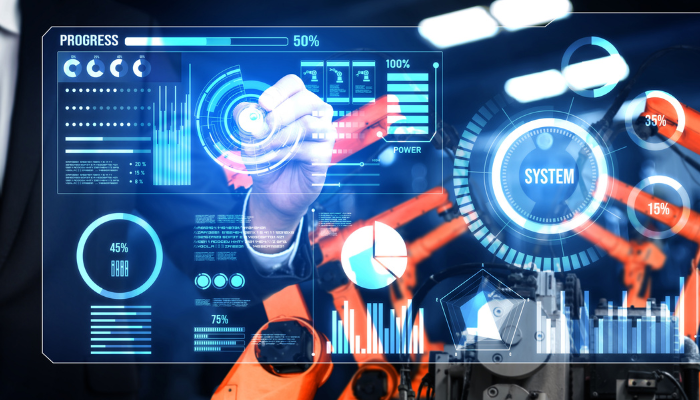
AI transforms the uncertainty of early-stage innovation into structured insights, guiding R&D towards market-ready solutions.
AI-Powered Prototyping and Design Optimization
Prototyping and design validation are traditionally iterative processes that consume significant time and resources. AI accelerates this by simulating multiple design variations, evaluating performance metrics, and optimizing features for functionality, aesthetics, or cost-effectiveness. Generative AI models can propose innovative design alternatives that human designers may not have envisioned, while predictive simulations assess real-world feasibility before physical prototypes are created.
Innovatov advocates for integrating AI into design workflows to achieve both speed and accuracy. By combining human intuition with AI-generated alternatives, companies can converge on optimal designs rapidly, reduce prototype iterations, and minimize material and labor costs. This synergy between machine intelligence and human creativity transforms prototyping from a slow bottleneck into a dynamic accelerator of innovation.
Predictive Testing and Quality Assurance
AI also enhances testing and quality assurance by predicting potential product failures, identifying vulnerabilities, and simulating performance under diverse conditions. Machine learning models analyze historical testing data, material properties, and operational scenarios to provide predictive insights about durability, safety, or compliance risks. This enables R&D teams to address issues before they manifest, reducing recalls, improving reliability, and ensuring regulatory adherence.
Innovatov structures AI adoption in testing by integrating predictive insights with real-world experimentation. By combining simulation data with controlled trials, organizations achieve a comprehensive understanding of product behavior, ensuring that innovations meet quality standards, customer expectations, and market requirements simultaneously.
Market Alignment and Customer-Centric Innovation
One of the most powerful applications of AI in R&D is its ability to align innovations with customer needs. Natural language processing, sentiment analysis, and social listening tools allow organizations to extract deep insights about user preferences, pain points, and emerging desires. AI identifies which features are likely to resonate, enabling companies to prioritize developments that deliver maximum market impact.
Innovatov emphasizes structured interpretation of customer data alongside AI predictions. By integrating user insights, predictive modeling, and competitive analysis, organizations ensure that product innovations are not only technically feasible but also commercially viable and customer-focused. This reduces the risk of market misalignment and accelerates adoption upon launch.
Ethical Considerations in AI-Driven Innovation
As AI becomes central to R&D, ethical considerations cannot be overlooked. AI models must be transparent, unbiased, and designed to augment human decision-making rather than replace it. Innovatov stresses the importance of ethical frameworks in innovation, including intellectual property respect, fairness in algorithmic recommendations, and responsible data usage. Structured governance ensures that AI-driven decisions foster creativity without compromising ethical standards or organizational integrity.
Businesses that embed ethics into AI-supported innovation gain not only operational advantages but also credibility and long-term trust with stakeholders, customers, and regulators. Responsible innovation ensures sustainable growth while minimizing reputational and legal risks.
Conclusion
AI is reshaping product innovation and R&D by transforming raw ideas into data-driven, customer-aligned, and market-ready solutions. From ideation and prototyping to predictive testing and market alignment, AI enables organizations to innovate faster, reduce risk, and maximize the impact of every development cycle. Innovatov supports businesses through this transformation, providing structured frameworks, tools, and case studies to ensure that AI adoption is practical, ethical, and strategically aligned.
By combining AI’s computational power with human creativity and judgment, companies can accelerate innovation, enhance quality, and ensure market success, building products that delight customers and position organizations as leaders in competitive industries.
Leave a Reply